![]() RetroFab
RetroFab
 RetroFab
Details
 |
|
| Playtime | Not Played |
| Last Activity | Never |
| Added | 04/05/2025 20:16:26 |
| Modified | 28/03/2026 14:22:27 |
| Completion Status | Not Played |
| Library | Itch.io |
| Source | itch.io |
| Platform | PC (Windows) |
| Release Date | 28/03/2022 |
| Community Score | |
| Critic Score | |
| User Score | |
| Genre | |
| Developer | Itizso |
| Publisher | |
| Feature | |
| Links | Store Page PCGamingWiki |
| Tag | 3D Retro Simulation |
Description
Playable 3D simulations of classic handheld electronic games including packaging and browseable instruction guides.
Playable 3D simulations of vintage electronic games
Game & Watch, Nintendo, Konami, Coleco, Tiger Electronics, Handheld, LCD, Simulation, Emulator, Simulator, 3D, Vintage Electronic Game, Itizso
RetroFab is an online collection of vintage electronic game simulations that can be played in the browser.
I am now releasing into early access the first (of hopefully many) simulations in this collection.
Latest News: RetroFab simulations are now also downloadable!
Features
Each simulation in this collection contains the following:

Gameplay
Playable 3D simulation
of original electronic device
of original electronic device

Box Art
Rotatable 3D views
of original packaging
of original packaging

Instructions
Browseable scans of
original instruction guides
original instruction guides
Acclaim™ Entertainment Inc.
Acclaim™ Entertainment was an American video game publisher that entered the electronic video game market in the early 1990s with a series of handheld LCD games based on popular licenses.
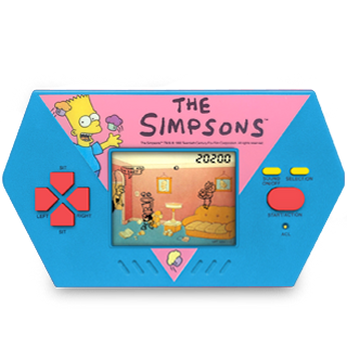
Bart Simpson's™
Cupcake Crisis
Cupcake Crisis
Acclaim Entertainment
1990
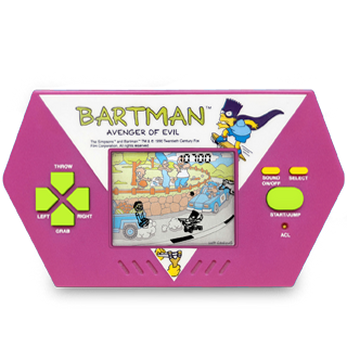
Bartman™
Avenger of Evil
Avenger of Evil
Acclaim Entertainment
1991
Bandai® Electronics
Bandai was a Japanese toy manufacturer and distributor that entered the portable video game market in the 1980s with a series of handheld electronic LCD games.
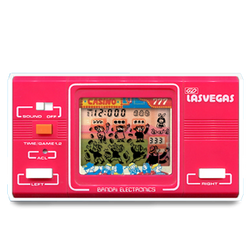
Las Vegas
Bandai Electronics
1981
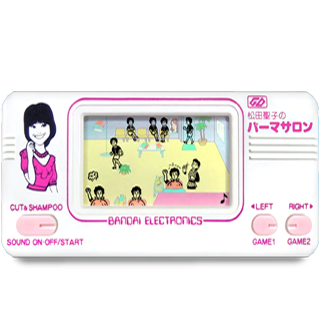
Beauty Salon
Bandai Electronics
1981
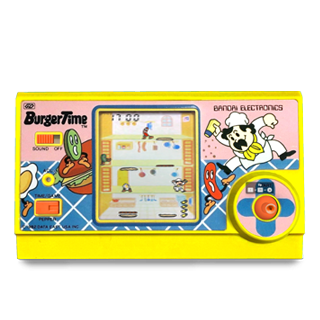
BurgerTime™
Bandai Electronics
1982
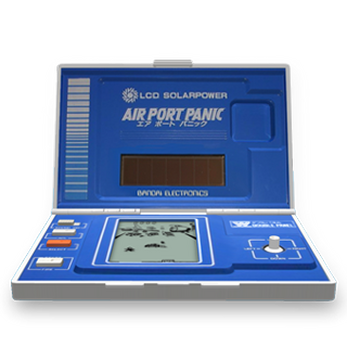
Airport Panic
Bandai Electronics
1982
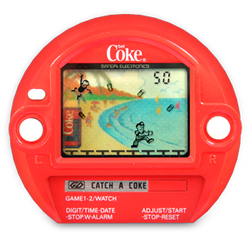
Catch a Coke
Bandai Electronics
1983
Casio
Casio Computer Co., Ltd. is a Japanese multinational electronics corporation that produced a series of handheld electronic games starting in the 1980s.
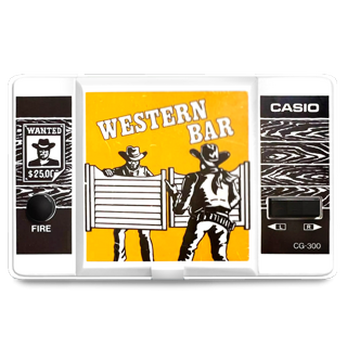
Western Bar
Casio
1984
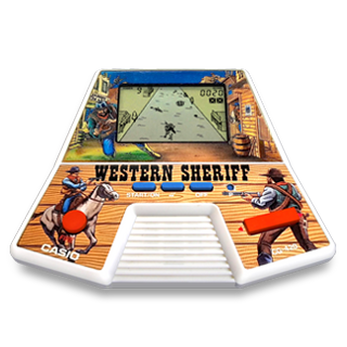
Western Sheriff
Casio
1987
Coleco
Coleco Industries, Inc. was a successful American toy company
that entered the portable video game market in the 1980's with a series of electronic game consoles
that included this popular line of licensed Mini-Arcade tabletop games.
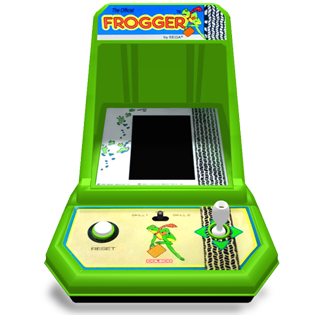
Frogger
Coleco
1981
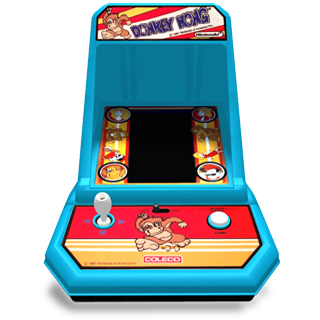
Donkey Kong
Coleco
1982
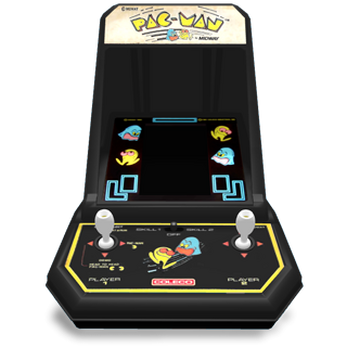
Pac-Man
Coleco
1981
Elektronika
Elektronika was a Soviet electronics manufacturer that entered the electronic video game market
in the mid 1980s with a series of Nintendo Game & Watch clones.
in the mid 1980s with a series of Nintendo Game & Watch clones.
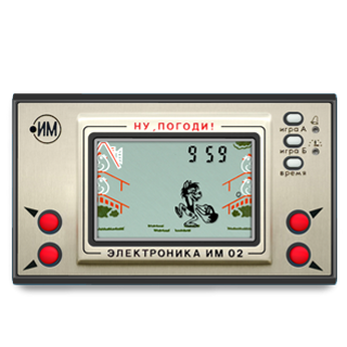
Nu, Pogodi!
Elektronika
1984
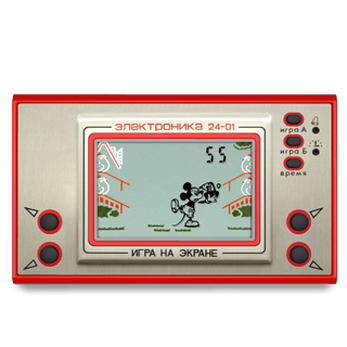
Mickey Mouse
Elektronika
1984
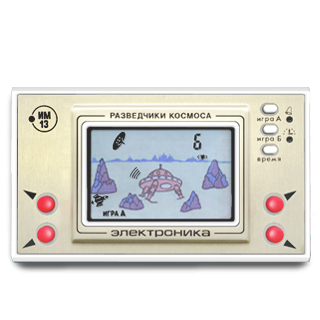
Explorers of Space
Elektronika
1989
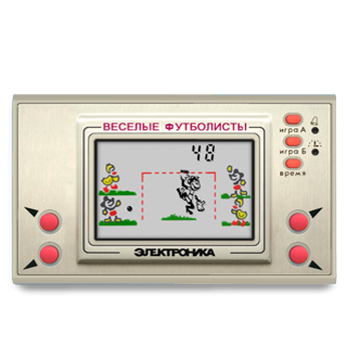
Monkey Goalkeeper
Elektronika
1989
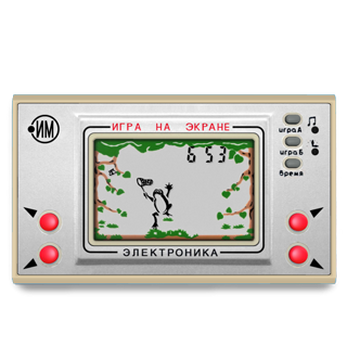
Frogling
Elektronika
1991
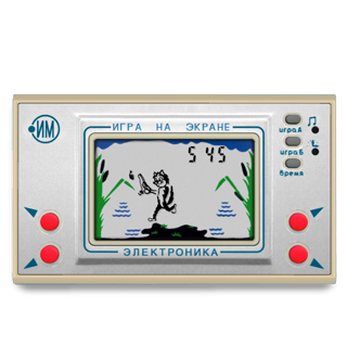
Cat Fisherman
Elektronika
1991
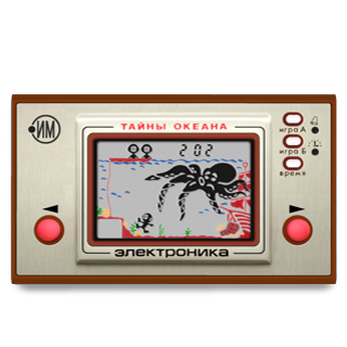
Ocean Secrets
Elektronika
1989
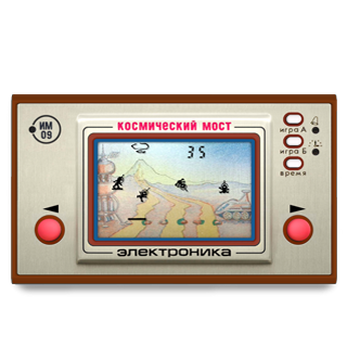
Space Bridge
Elektronika
1989
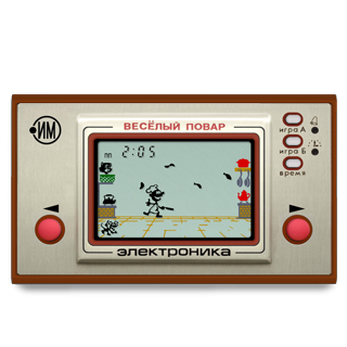
Merry Cook
Elektronika
1989
Epoch
Epoch Co., Ltd. is a Japanese toy and computer games company that released a series of electronic LCD games starting in the late 1980s.
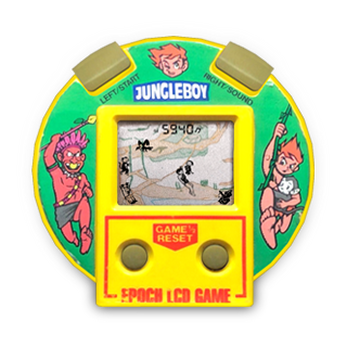
Jungle Boy
Epoch
1989
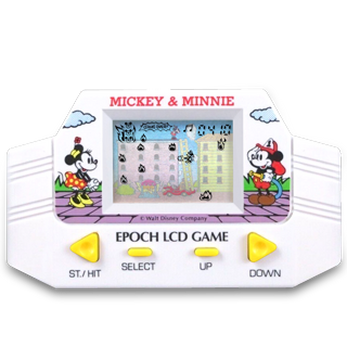
Mickey & Minnie
Epoch
1990
Gakken
Gakken Holdings Co., Ltd. is a Japanese publishing company that released a series of electronic handheld games starting in the early 1980s.
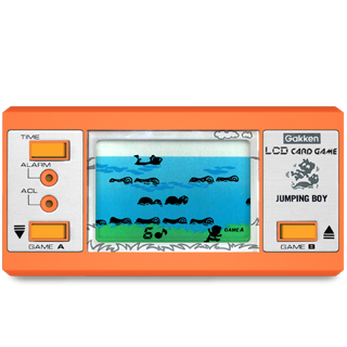
Jumping Boy
Gakken
1982
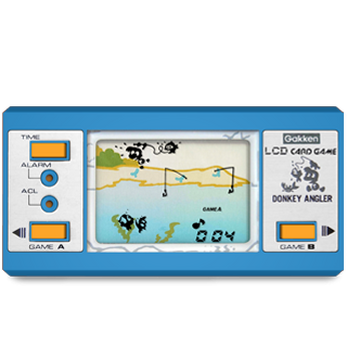
Donkey Angler
Gakken
1982
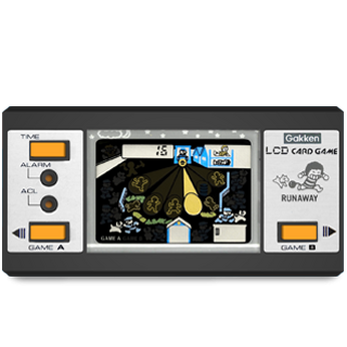
Runaway
Gakken
1982
Grandstand
Grandstand Leisure Products was a British electronic games manufacturer and distributor
that released a series of tabletop and handheld games in the 1980s.
that released a series of tabletop and handheld games in the 1980s.
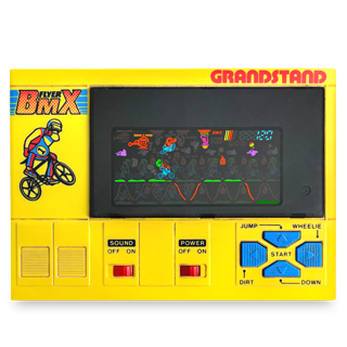
BMX Flyer
Grandstand
1983
Hasbro® Inc.
Hasbro is an American toy and media company that owns various brands including the handheld electronic products of Milton Bradley and Parker Brothers.
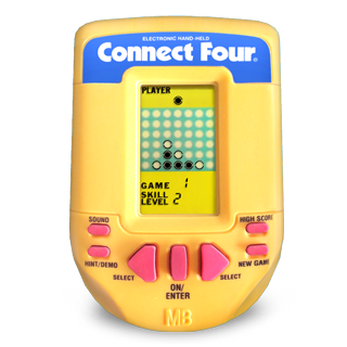
Milton Bradley
Connect Four
Connect Four
Milton Bradley
1995
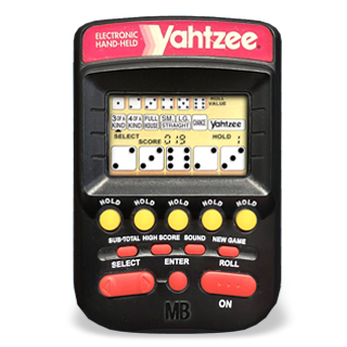
Milton Bradley
Yahtzee
Yahtzee
Milton Bradley
1995
Konami
Konami Co. Ltd. was a successful Japanese arcade
video game developer and publisher that released a series of licensed portable
handeld electronic games.
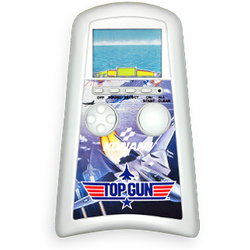
Top Gun
Konami
1989
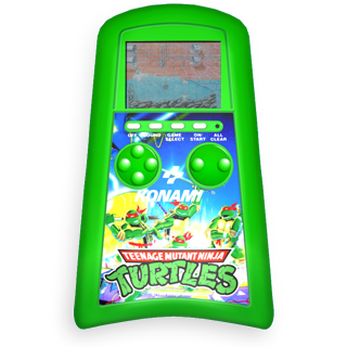
Teenage Mutant Ninja Turtles
Konami
1989
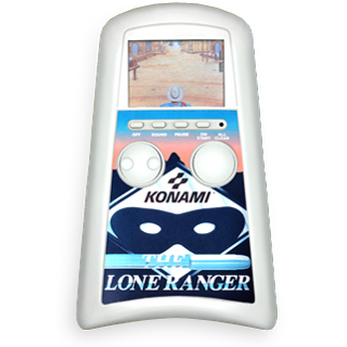
The Lone Ranger
Konami
1989
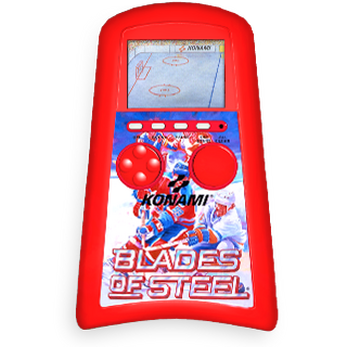
Blades of Steel
Konami
1989
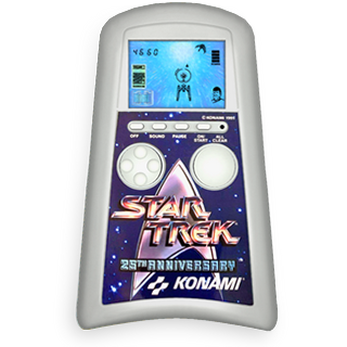
Star Trek 25th Anniversary
Konami
1991
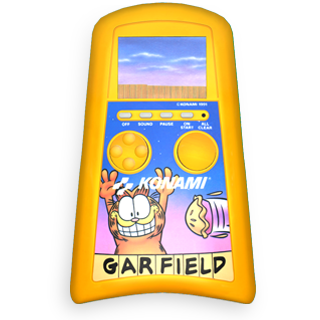
Garfield
Konami
1991
Ludotronic
Ludotronic was a French electronics company that started distributing handheld electronic games
in the early 1980s, most of which were licensed from other manufacturers.
in the early 1980s, most of which were licensed from other manufacturers.
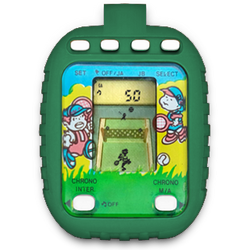
Colere Au Tennis
( Tennis Menace )
( Tennis Menace )
Ludotronic
1982
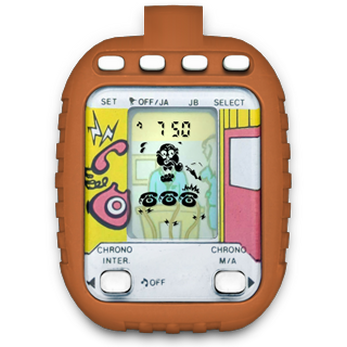
Les Téléphones Fous
( Hot Line )
( Hot Line )
Ludotronic
1982
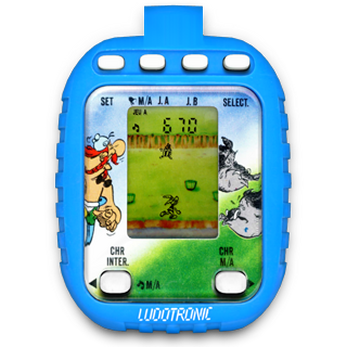
Asterix™
Hunt for the Boars
Hunt for the Boars
Ludotronic
1984
Mattel Electronics
Mattel is an American toy manufacturer that was the first company to enter the portable game market in the 1970s with a series of handheld electronic games.
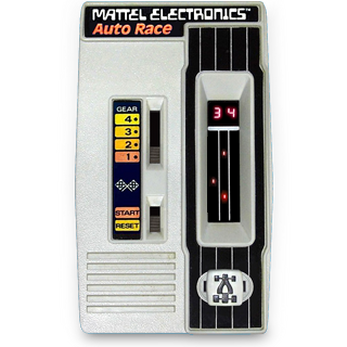
Auto Race
Mattel Electronics
1976
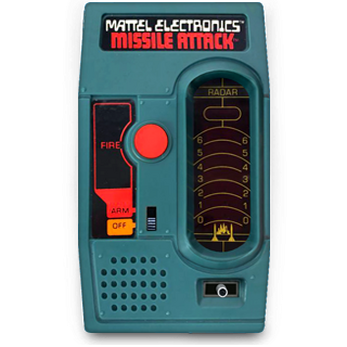
Missile Attack \ Space Alert
Mattel Electronics
1977
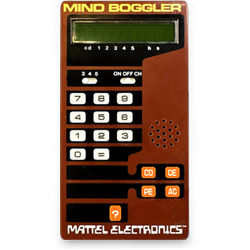
Mind Boggler
Mattel Electronics
1978
McDonald's Corporation is an American multinational fast food chain that began including
mini handheld electronic games for kids in Happy Meals starting in the early 2000s.
mini handheld electronic games for kids in Happy Meals starting in the early 2000s.
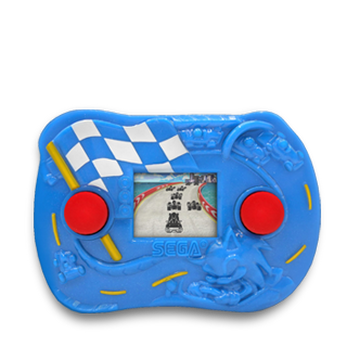
Sonic's Speedway
McDonalds
2003
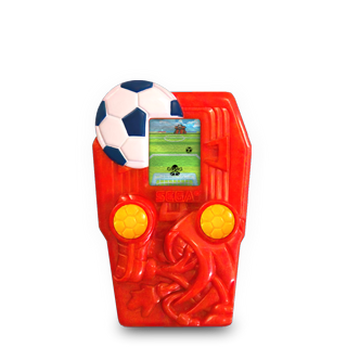
Knuckles Soccer
McDonalds
2003
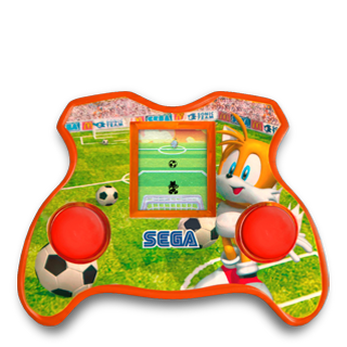
Tails Football
McDonalds
2004
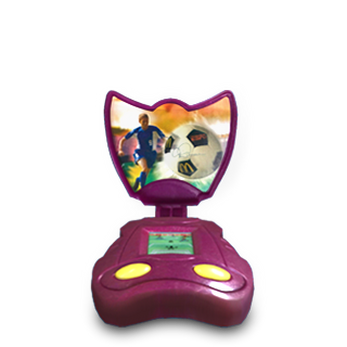
Mia Hamm Soccer
McDonalds
2004
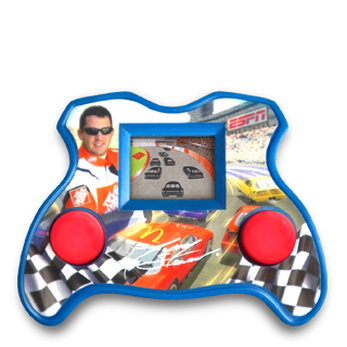
Tony Stewart Racing
McDonalds
2004
Micro Games of America
MGA Entertainment is a privately owned American toy company that released a series
of handheld electronic games starting in the 1990s.
of handheld electronic games starting in the 1990s.

Star Trek™ First Contact
MGA
1996
Milton Bradley® Microvision
Milton Bradley was an American board game manufacturer that entered the electronic video game market in 1979 with the release of the Microvision, the first cartridge based handheld game console.
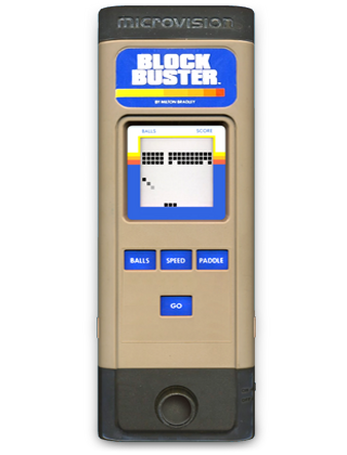
Block Buster
Microvision
1979
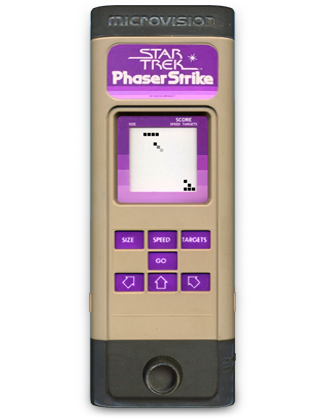
Phaser Strike
Microvision
1979
Namco
Namco Ltd. was a Japanese multinational video game and entertainment company
that produced a series of handheld LCD games starting in the late 1980s.
that produced a series of handheld LCD games starting in the late 1980s.
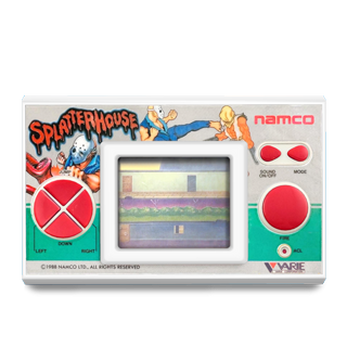
SplatterHouse
Namco
1988
Nelsonic
Nelsonic Industries is an American manufacturing company that released a series of electronic wristwatch games starting in the early 1980s.
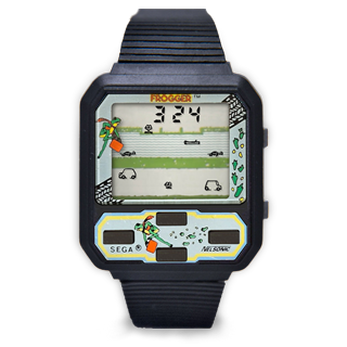
Frogger
Nelsonic
1983
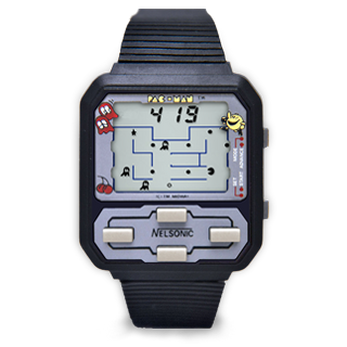
Pac-Man
Nelsonic
1983
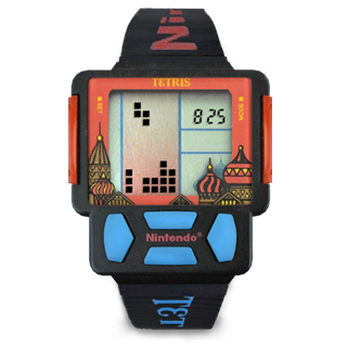
Tetris
Nelsonic
1990
Nintendo® Game & Watch
The Game & Watch™ series of dedicated handheld LCD electronic games
marked the first entrance of the Japanese toy company Nintendo into the electronic video game market in the 1980's.
Silver Series
( April 1980 - October 1980 )
In 1980 Nintendo released it's first series of handheld electronic games each featuring a dedicated LCD game with a bonus watch function. The silver metallic front plate gave the series it's name.
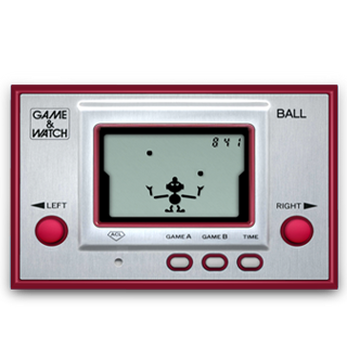
Ball
Nintendo
1980
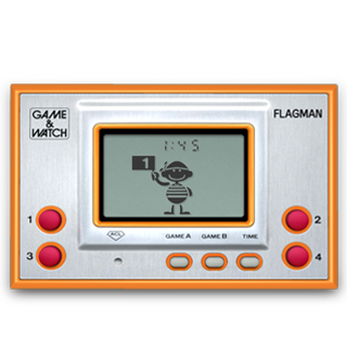
Flagman
Nintendo
1980
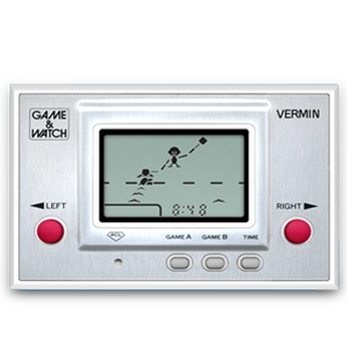
Vermin
Nintendo
1980
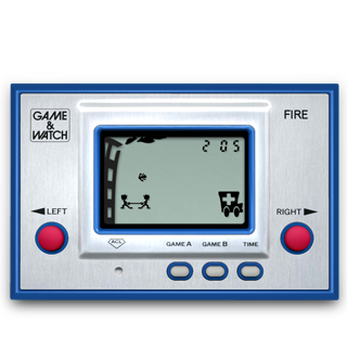
Fire
Nintendo
1980
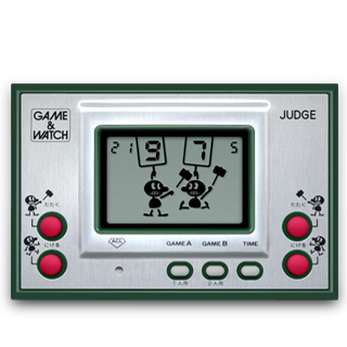
Judge
Nintendo
1980
Gold Series
( January 1981 - April 1981 )
After the huge success of the Silver Series Nintendo released the next generation of it's Game & Watch™ handhelds the following year, featuring a new alarm function, color background-foils and a distinctive gold metallic front plate.
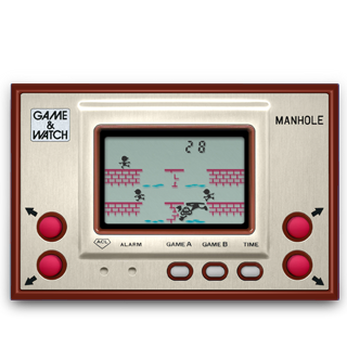
Manhole
Nintendo
1981
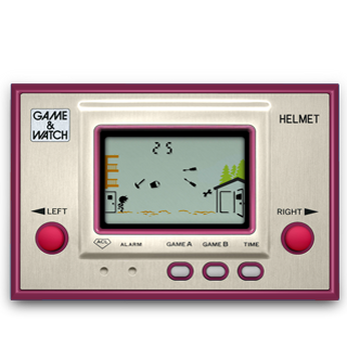
Helmet
Nintendo
1981
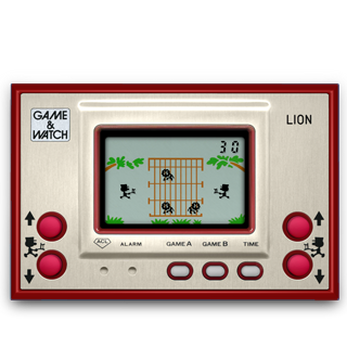
Lion
Nintendo
1981
Wide Screen Series
( June 1981 - April 1982 )
A bigger LCD screen and a brand new box design were the most prominent innovations in Nintendo's follow up to the Gold Series with an impressive line-up of timeless classics.
Featuring a wide LCD screen and impressive line-up of timeless classics (including some of the first licenced titles) Nintendo's Wide Screen Series ranks among some of the most popular Game & Watch™ titles.
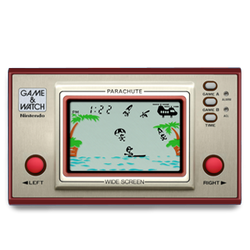
Parachute
Nintendo
1981
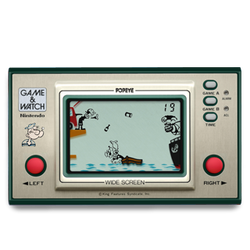
Popeye
Nintendo
1981
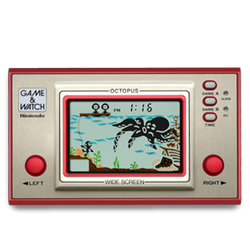
Octopus
Nintendo
1981
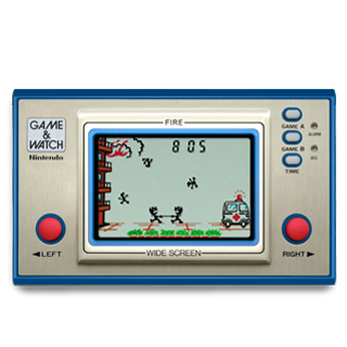
Fire
Nintendo
1981
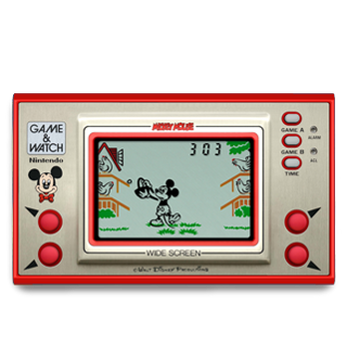
Mickey Mouse
Nintendo
1981
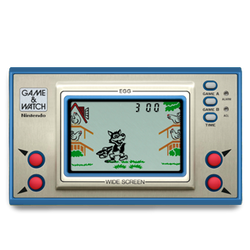
Egg
Nintendo
1981
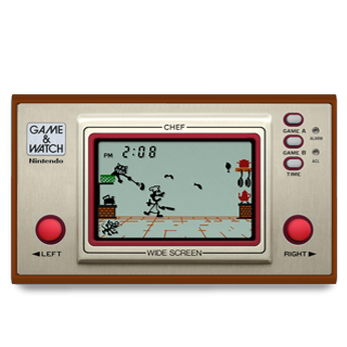
Chef
Nintendo
1981
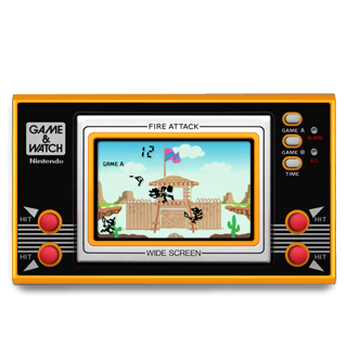
Fire Attack
Nintendo
1982
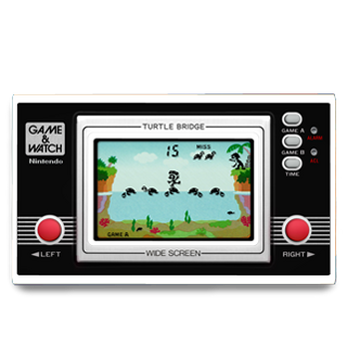
Turtle Bridge
Nintendo
1982
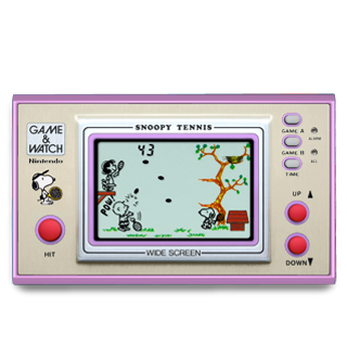
Snoopy Tennis
Nintendo
1982
Multi Screen Series
( May 1982 - August 1989 )
In 1982 Nintendo introduced the innovative Multi Screen series whose most prominent feature was the use of two LCD screens in one foldable handheld with beautiful background-foil artwork and fine LCD elements.
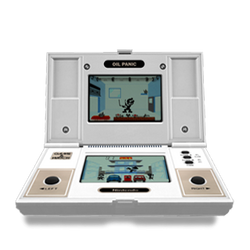
Oil Panic
Nintendo
1982
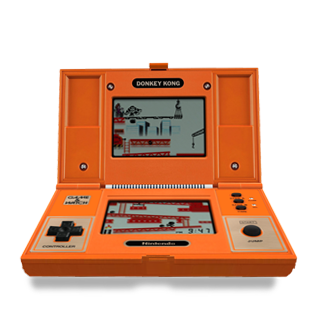
Donkey Kong
Nintendo
1982
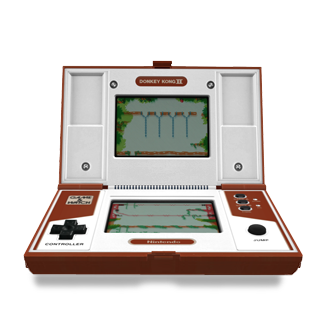
Donkey Kong II
Nintendo
1983
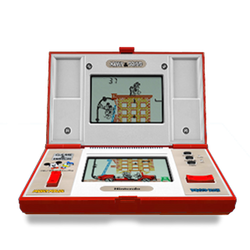
Mickey & Donald
Nintendo
1982
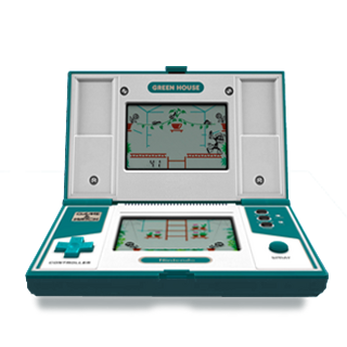
Green House
Nintendo
1982
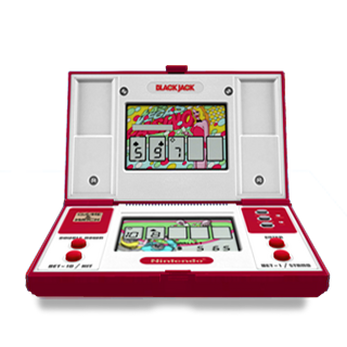
Blackjack
Nintendo
1985
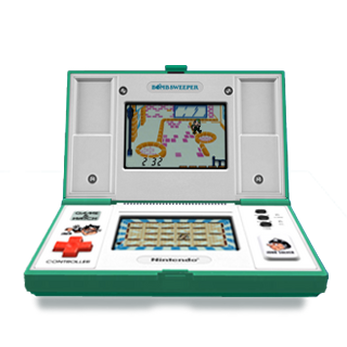
Bomb Sweeper
Nintendo
1987
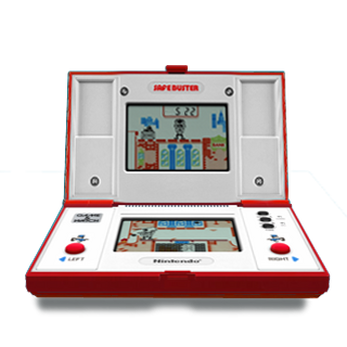
Safe Buster
Nintendo
1988
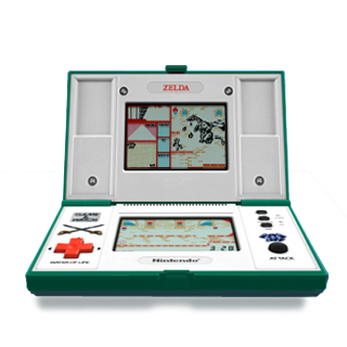
Zelda
Nintendo
1989
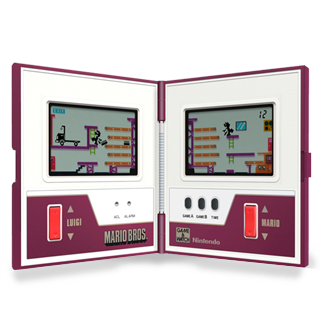
Mario Bros.
Nintendo
1983
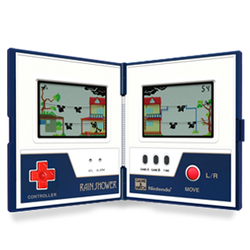
Rain Shower
Nintendo
1983
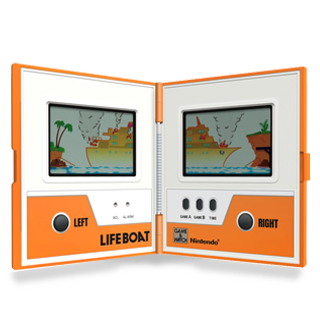
Lifeboat
Nintendo
1983
New Wide Screen Series
( October 1982 - October 1991 )
Nintendo made further subtle improvements to the earlier Wide Screen series with a new box design featuring vivid artwork and a more colorful metallic front plate making the single screen LCD handhelds even classier.
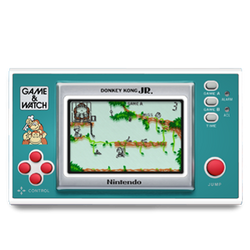
Donkey Kong Jr.
Nintendo
1982
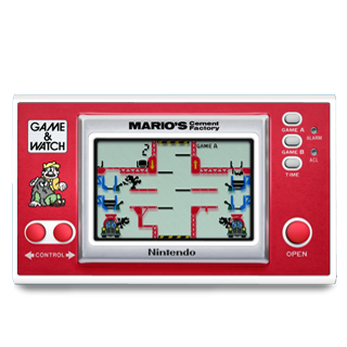
Mario's Cement Factory
Nintendo
1983
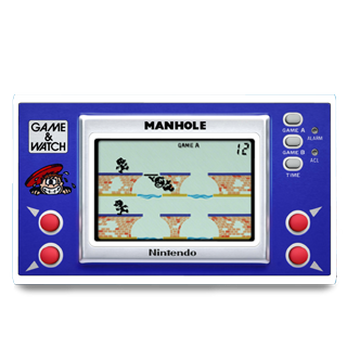
Manhole
Nintendo
1983
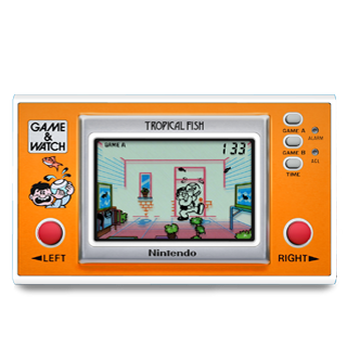
Tropical Fish
Nintendo
1985
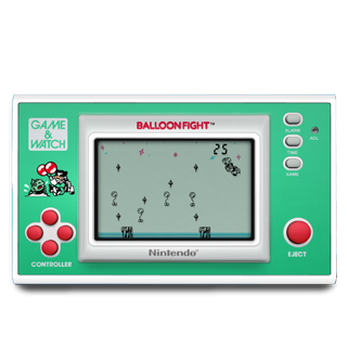
Balloon Fight
Nintendo
1988
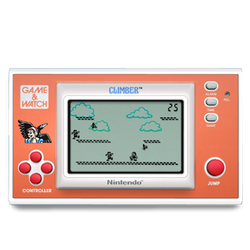
Climber
Nintendo
1988
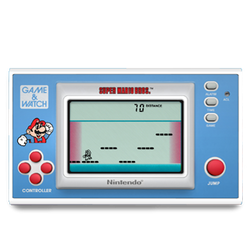
Super Mario Bros.
Nintendo
1988
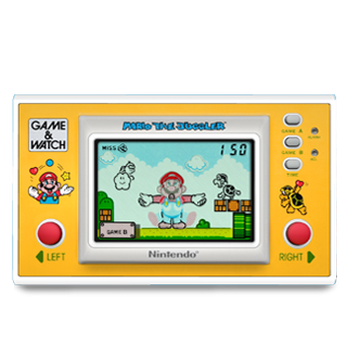
Mario The Juggler
Nintendo
1991
Table Top Series
( April 1983 - August 1983 )
Nintendo fulfilled the dream of many gamers to have their own mini arcade machine with the introduction of the Table Top Series which featured full color LCD graphics for the first time.
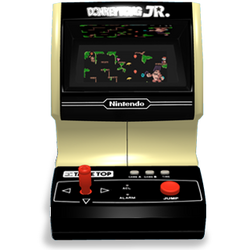
Donkey Kong Jr.
Nintendo
1983
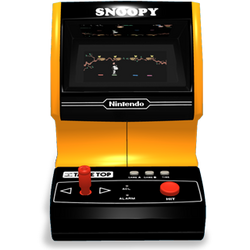
Snoopy
Nintendo
1983
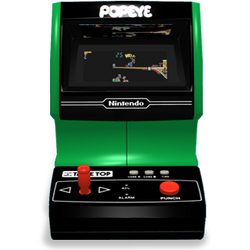
Popeye
Nintendo
1983
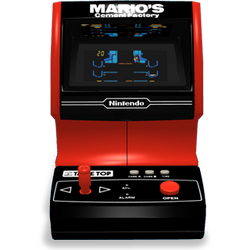
Mario's Cement Factory
Nintendo
1983
Panorama Screen Series
( August 1983 - September 1984 )
A few months after the introduction of the Table Top Series, Nintendo released a refinement of that technology in the form of the more portable Panorama Screen Series\.
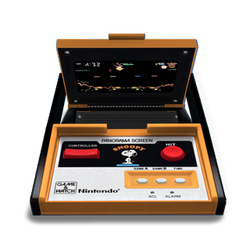
Snoopy
Nintendo
1983
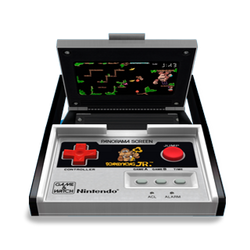
Donkey Kong Jr.
Nintendo
1983
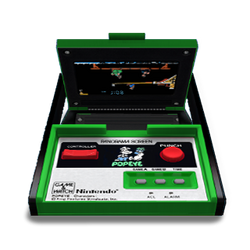
Popeye
Nintendo
1983
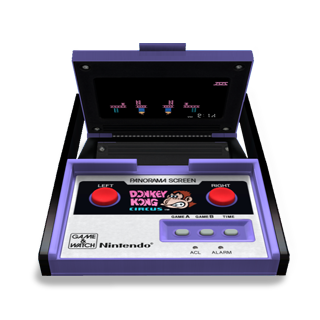
Donkey Kong Circus
Nintendo
1984
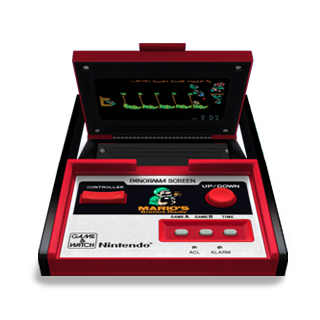
Mario's Bombs Away
Nintendo
1983
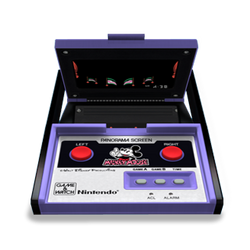
Mickey Mouse
Nintendo
1984
Micro Vs. System
( July 1984 - November 1984 )
The Micro Vs. System introduced two-player gaming to the Game & Watch™ series by attaching two wired controllers to a foldable unit that featured a wide LCD screen.
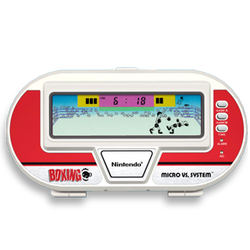
Boxing
Nintendo
1984
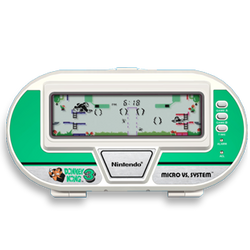
Donkey Kong 3
Nintendo
1984
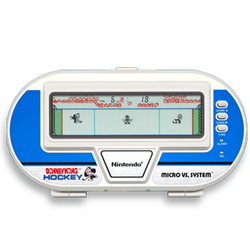
Donkey Kong Hockey
Nintendo
1984
Crystal Screen Series
( June 1986 - November 1986 )
The Crystal Screen series introduced a new wide format translucent LCD handheld featuring a transparent see-thru screen and innovative side-scrolling gameplay.
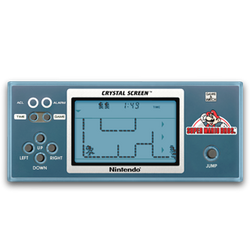
Super Mario Bros
Nintendo
1986
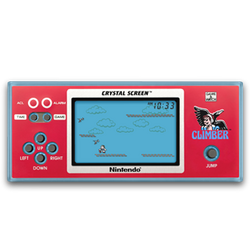
Climber
Nintendo
1986
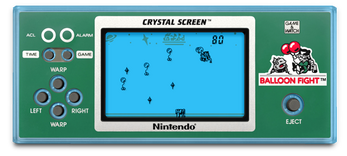
Balloon Fight
Nintendo
1986
SuperColor Series
( February 1984 )
Featuring a colored LCD screen that no longer required an external light source (required by the Table Top and Panorama Screen series) and a new large portrait format LCD screen, the Super Color Series was perfectly suited for the two games released in this format.
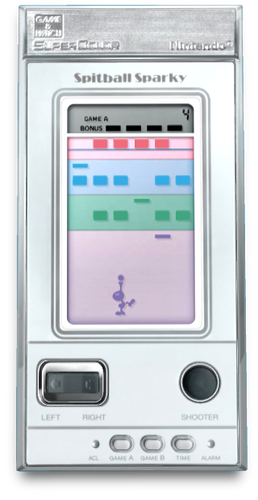
Spitball Sparky
Nintendo
1984
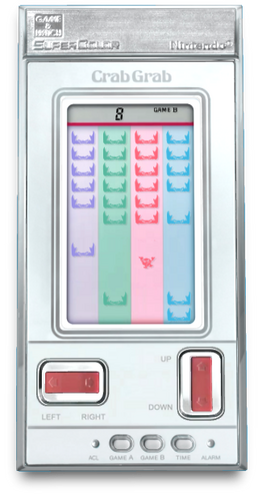
CrabGrab
Nintendo
1984
Special Editions
( August 1987 )
Nintendo released a limited edition of it's Super Mario Bros handheld LCD game as a prize for winners of a competition it held in 1987. Only 10,000 copies were given away, making it the most rare of the 3 Game & Watch versions of the game.
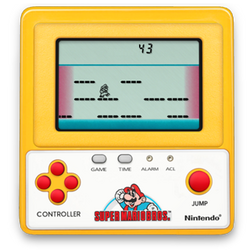
Super Mario Bros.
Nintendo
1987
Prototypes
( 1988 )
Nintendo released a limited edition of it's Super Mario Bros handheld LCD game as a prize for winners of a competition it held in 1987. Only 10,000 copies were given away, making it the most rare of the 3 Game & Watch versions of the game.
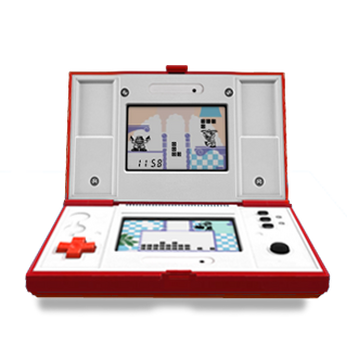
Tetris Jr.
Nintendo
1988
Nintendo® Game Boy
Following the success of the Game & Watch™ series Nintendo used similar
LCD technology to introduce the innovative cartridge-based Game Boy™ handheld electronic game console in 1989.
Some of the original Game & Watch™ titles were republished as collections for the Game Boy™.
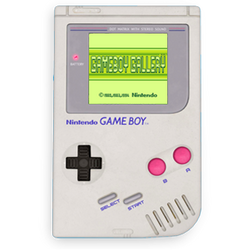
Game Boy Gallery
Nintendo
1995
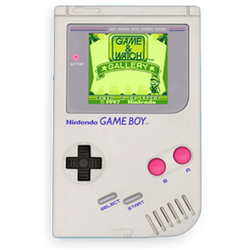
Game & Watch Gallery
Nintendo
1997
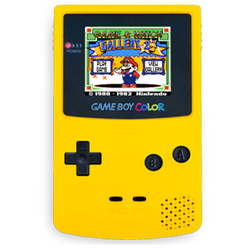
Game & Watch Gallery 2
Nintendo
1998
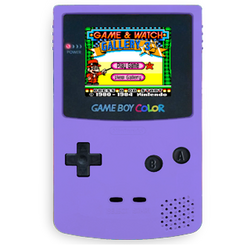
Game & Watch Gallery 3
Nintendo
1999
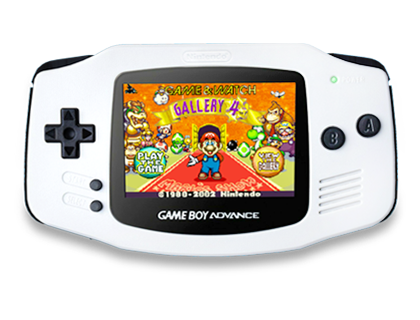
Game & Watch Gallery 4
Nintendo
2002
Nintendo® Mini Classics
Starting in 1998 the Austrian company Stadlbauer produced a series of miniture keychain LCD games under license from Nintendo. The series includes a number of reissues of Game & Watch titles.
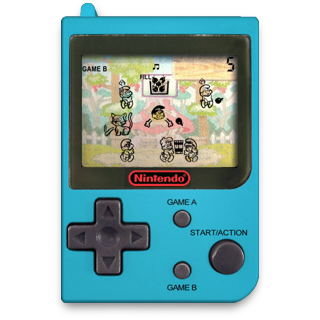
The Smurfs
Nintendo
1998
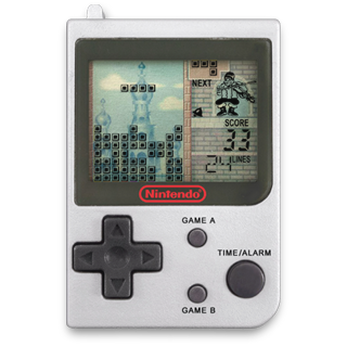
Tetris
Nintendo
1998
Nintendo® DS
In 2004 Nintendo released the Nintendo DS™, a dual screen handheld electronic game console.
Some of the original Game & Watch™ titles were republished as collections for the Nintendo DS™.
Some of the original Game & Watch™ titles were republished as collections for the Nintendo DS™.
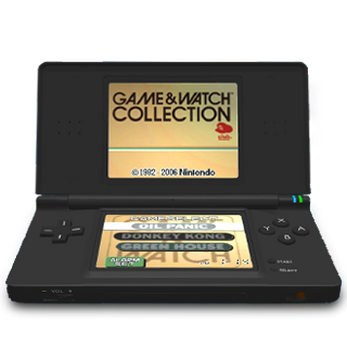
Game & Watch Collection
Nintendo
2006
Parker Brothers®
Parker Brothers was an American board game manufacturer (later acquired by Hasbro)
that entered the electronic game market in the late 1970s with a series of handheld LED games.
that entered the electronic game market in the late 1970s with a series of handheld LED games.
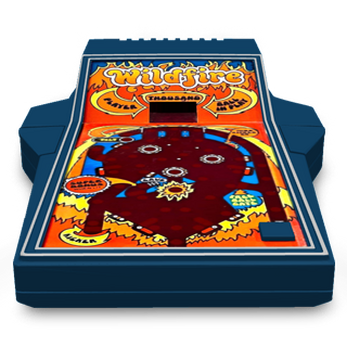
Wildfire
Parkey Brothers
1979
Popy Electronics
Popy Electronics was a Japanese toy manufacturer, owned by Bandai, that released
a series of handheld electronic games starting in the early 1980s.
a series of handheld electronic games starting in the early 1980s.
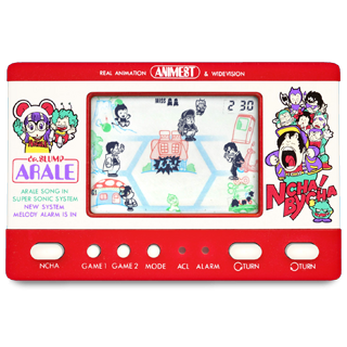
Ncha! Bycha
Popy Electronics
1982
Radio Shack®
Radio Shack, a division of the Tandy Corporation, was an American electronics retailer
that released a series of LCD games starting in the 1980s.
that released a series of LCD games starting in the 1980s.
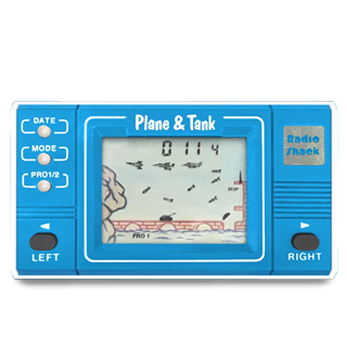
Plane & Tank
Radio Shack
1986
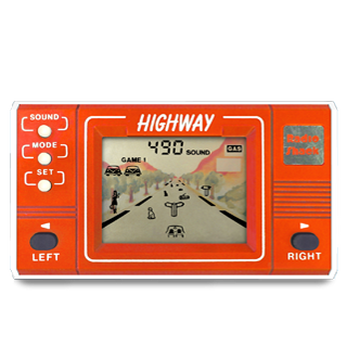
Highway
Radio Shack
1987
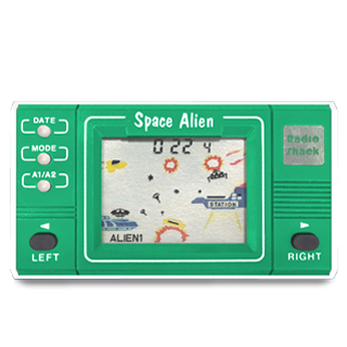
Space Alien
Radio Shack
1989
SEGA®
Sega Corporation is a Japanese video game company that issued licenses for some of it's games
to be published as handheld electronic games by other manufacturers.
to be published as handheld electronic games by other manufacturers.
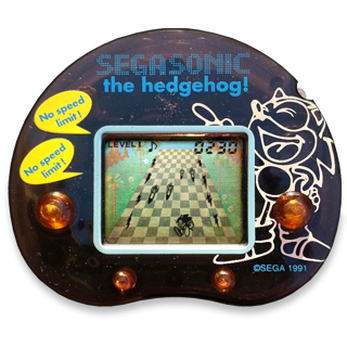
SegaSonic the Hedgehog
SEGA
1992
Sunwing
Sunwing is a Taiwanese manufacturer that released a series of handheld electronic
games starting in the early 1980s.
games starting in the early 1980s.
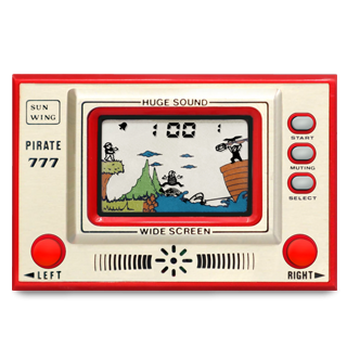
Pirate
Sunwing
1982
Tandy® Corporation
Tandy was an American electronics company that released a series of handheld
electronic LCD games staring in the 1980s.
electronic LCD games staring in the 1980s.
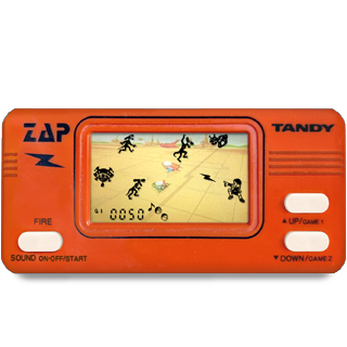
Zap
Tandy
1985
Tiger® Electronics
Tiger Electronics Ltd. was an independent American toy manufacturer best known for their affordable series of dedicated handheld LCD games based on popular licenses.
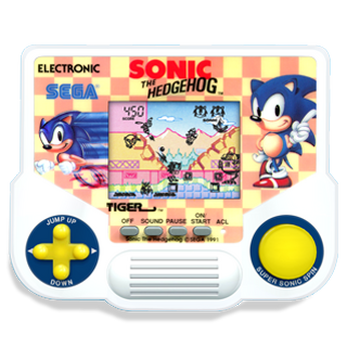
Sonic The Hedgehog
Tiger Electronics
1992
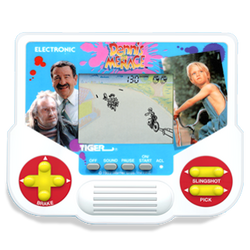
Dennis the Menace
Tiger Electronics
1993
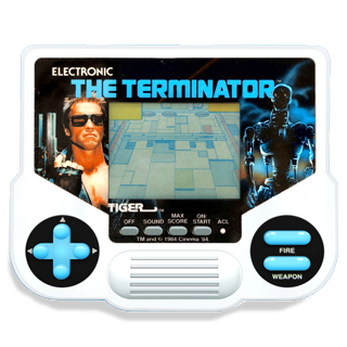
The Terminator™
Tiger Electronics
1988
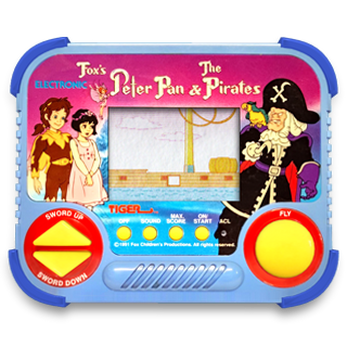
Fox's Peter Pan
& The Pirates
& The Pirates
Tiger Electronics
1991
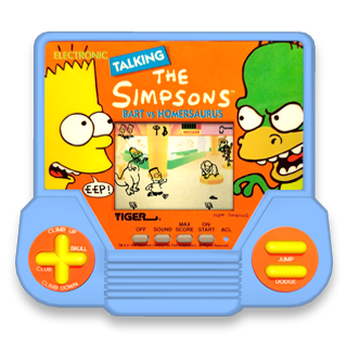
The Simpsons™
Bart vs Homersaurus
Bart vs Homersaurus
Tiger Electronics
1994
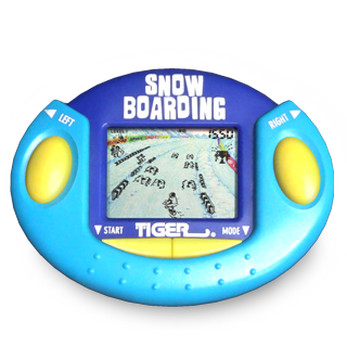
All Out Action
Snowboarding
Snowboarding
Tiger Electronics
1999
TOMY Company, Ltd.
TOMY is a Japanese entertainment company that makes children's toys and merchandise
including a series of electronic games in the early 1980s.
including a series of electronic games in the early 1980s.
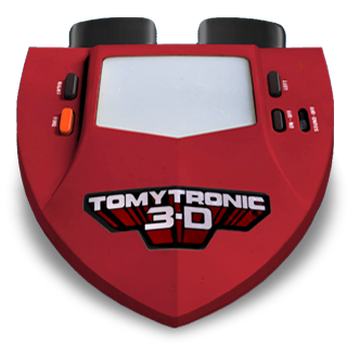
Sky Attack
TOMY
1983
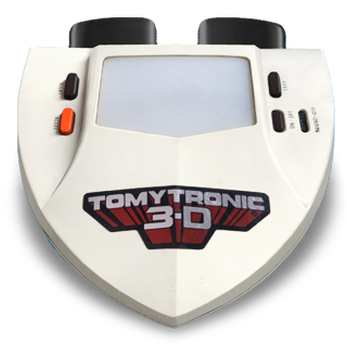
Thundering Turbo
TOMY
1983
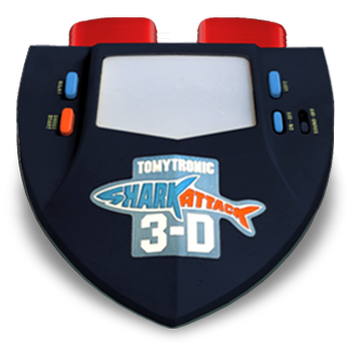
Shark Attack
TOMY
1983
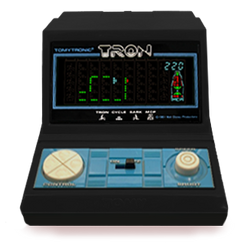
Tron
TOMY
1982
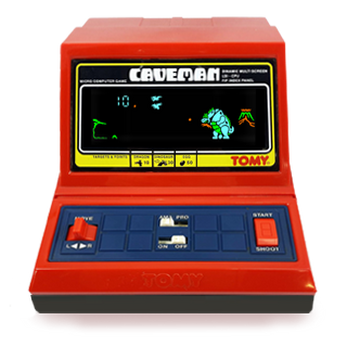
Caveman
TOMY
1982
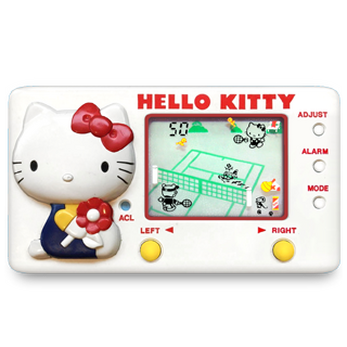
Tennis School
TOMY
1983
VTech
VTech (originally Video Technology Ltd.) is a supplier of electronic learning products that entered the video game market in the early 1980s with a series of handheld electronic games.
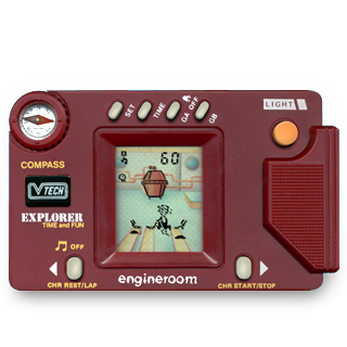
Engine Room
VTech
1984
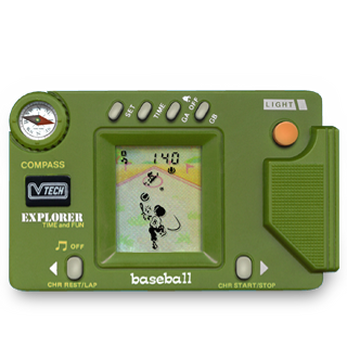
Baseball
VTech
1984
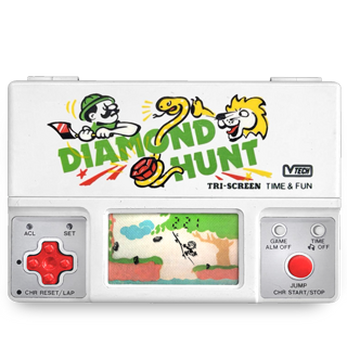
Diamond Hunt
VTech
1982